Home Blog
News, guides, and free downloads for anyone looking to hire and manage global teams
Indonesia does not have a single national minimum wage. Instead, minimum wages are set at the provincial level (UMP) and at the regency/city level (UMK), with rates varying significantly across the country. For 2026, Jakarta has the highest provincial minimum wage at IDR 5,729,876 per month (approximately USD 342), while the lowest UMK rates are around IDR 2.3 million per month in parts of Central and West Java. This guide covers how Indonesia’s minimum wage system works, 2026 rates for key provinces, the new wage formula under Government Regulation No. 49/2025, mandatory employer contributions (BPJS Kesehatan and BPJS Ketenagakerjaan), working hours and overtime rules, penalties for non-compliance, and what international companies hiring in Indonesia need to know.
Read More
IR35 is UK tax legislation that prevents ‘disguised employment’ by ensuring contractors who work like employees pay similar Income Tax and National Insurance as permanent staff. Since April 2021, medium and large private sector clients are responsible for determining the employment status of contractors. From April 2026, new company size thresholds mean approximately 14,000 businesses will be reclassified as ‘small’, shifting status determination responsibility back to contractors. This guide covers how IR35 works, who is responsible, the three employment status tests, the April 2026 changes, the new Joint and Several Liability rules for umbrella companies, penalties for non-compliance, and what international companies hiring contractors in the UK need to know.
Malaysia’s minimum wage in 2026 is RM1,700 per month (approximately USD 370), unchanged from the increase that took effect on 1 February 2025. The rate applies nationwide to all employees, including foreign workers, part-time workers, and gig workers. The only exemptions are domestic helpers and apprentices. This guide covers the current minimum wage rates in Malaysia, daily and hourly breakdowns, mandatory employer contributions (EPF, SOCSO, EIS), working hours and overtime rules, leave entitlements, penalties for non-compliance, and what international companies hiring in Malaysia need to know.
The EU Working Time Directive (2003/88/EC) sets the minimum rules for working hours, rest periods, and annual leave across all EU member states. It limits the average working week to 48 hours, guarantees 11 hours of daily rest, requires a minimum of 4 weeks’ paid annual leave, and regulates night work. However, each member state implements the directive differently through national legislation, creating significant variation in how the rules apply in practice. This guide explains what the directive requires, how key EU countries have implemented it, where the opt-out applies, and what employers hiring across Europe need to know.
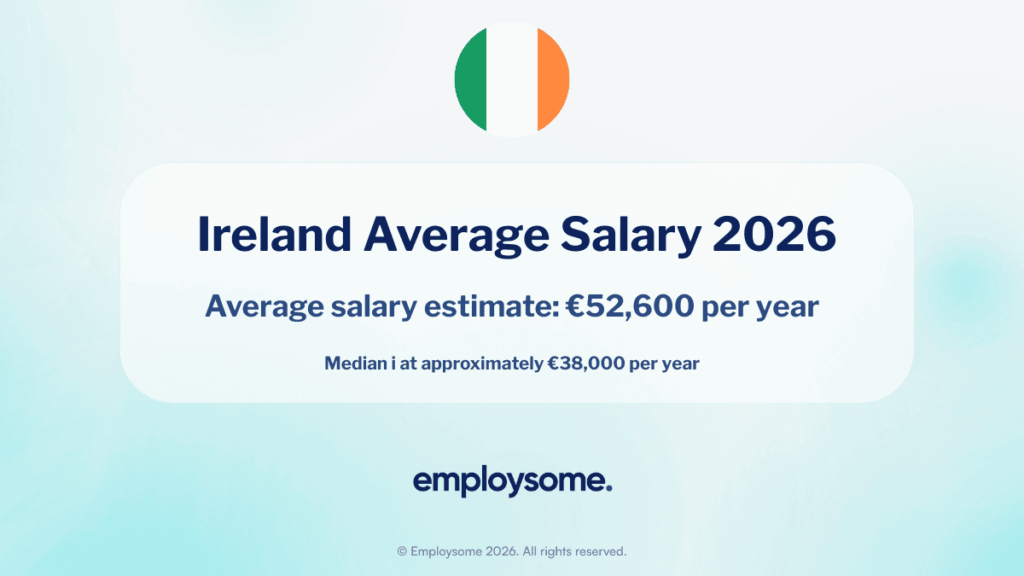
The average gross weekly earnings in Ireland reached €1,011.88 in Q4 2025 (CSO, published February 2026), equivalent to approximately €52,600 per year. The median is significantly lower at approximately €38,000 (€730.89/week, CSO EAADS 2024), reflecting Ireland’s ‘two-speed’ economy where multinational tech and pharma salaries pull the average far above what most workers actually earn. This guide covers national averages, sector breakdowns, how Dublin compares to the rest of Ireland, the gender pay gap, employer costs (PRSI, auto-enrolment pension), how Ireland compares to other European countries, and what these figures mean for companies hiring in the Irish market.
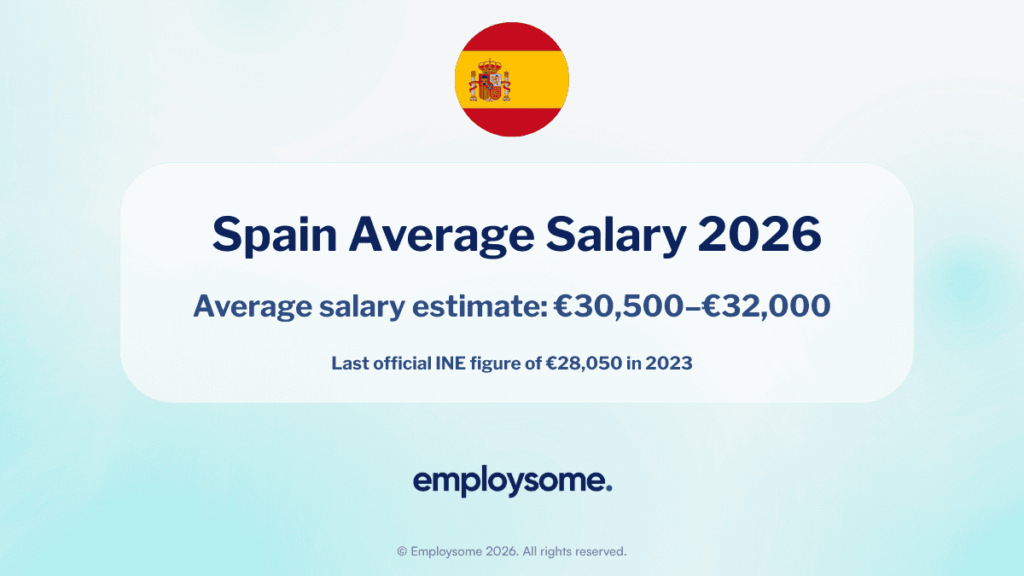
The average gross annual salary in Spain is approximately €30,500 – €32,000 in 2026, up from the last official INE figure of €28,050 in 2023. The median is significantly lower at approximately €23,000, reflecting Spain’s concentration of low-wage service sector employment. This guide covers national averages, regional breakdowns across all 17 autonomous communities, industry salary benchmarks, the gender pay gap, how Spain compares to other European countries, and what these figures mean for employers hiring in the Spanish market.